

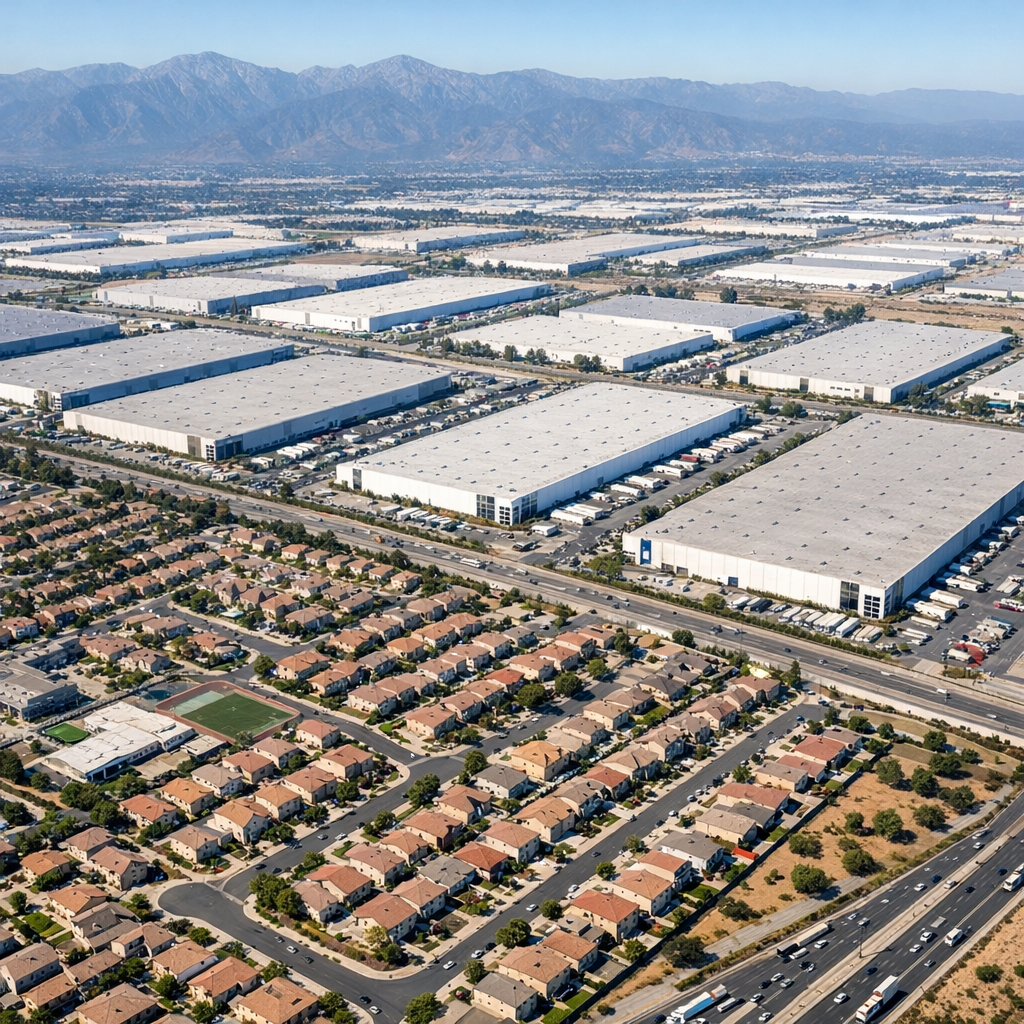
Fontana, California, has experienced significant growth in the logistics and warehousing sector, transforming the city into a pivotal hub for national distribution networks. This expansion has introduced economic opportunities but also sparked discussions about its impact on the community’s health and environment.
The Rise of Warehousing in Fontana
Over the past decade, Fontana has seen a surge in warehouse developments, capitalizing on its strategic location intersected by major highways such as Interstates 10, 15, and State Route 210. This positioning has attracted numerous logistics companies aiming to streamline their distribution processes.
Mayor Acquanetta Warren has been a proponent of this growth, emphasizing the economic benefits and job creation associated with the logistics industry. She highlighted the region’s affordable land and extensive freeway access as key factors in attracting warehouse developments.
Community Concerns and Environmental Impacts
Despite the economic advantages, the rapid expansion of warehouses has raised concerns among residents. Issues such as increased truck traffic, air pollution, and noise have become focal points of community discussions. In 2023, the Fontana City Council faced public outcry over a proposal to build three large warehouses near two high schools. The council ultimately rejected the proposal, reflecting the community’s apprehension about the proximity of industrial developments to residential and educational areas.
Environmental advocates have also voiced concerns about the cumulative impact of warehouse developments on air quality. The Inland Empire region, encompassing Fontana, already experiences some of the highest smog levels in the nation. The addition of numerous warehouses and the associated increase in diesel truck traffic have the potential to exacerbate these conditions.
Striking a Balance
The challenge for Fontana lies in balancing economic development with the health and well-being of its residents. While the logistics industry brings jobs and revenue, it is essential to consider sustainable practices and community input in future developments. Implementing measures such as buffer zones between warehouses and residential areas, investing in green infrastructure, and enforcing stricter environmental regulations can help mitigate negative impacts.
As Fontana continues to evolve, ongoing dialogue between city officials, developers, and the community will be crucial in shaping a future that honors both economic ambitions and the quality of life for its residents.